
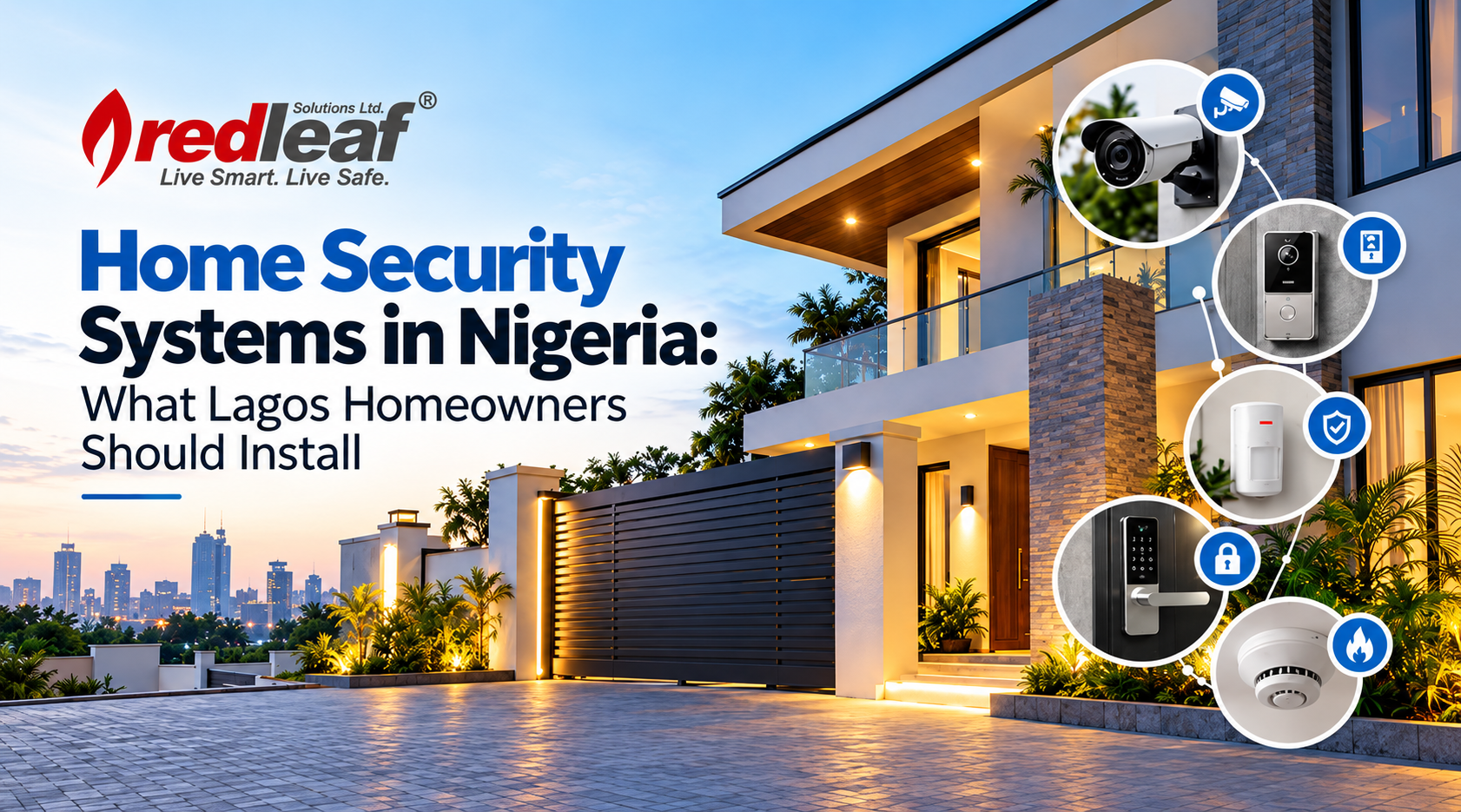
The best home security systems Nigeria homeowners can choose combine several simple measures that work together: a secure perimeter, cameras, alarms, controlled entry and reliable power. Many Lagos homeowners buy one item, such as a camera or a gate motor, and hope it is enough. A single device rarely is.
This guide explains what to install, in what order, and how the right plan changes for a house, an estate home or an apartment. It is written for homeowners who want real protection without overspending on features they will not use.
Before you choose equipment, walk around your property and answer a few questions. This takes about thirty minutes and makes every later decision easier.
Write down your answers. A professional survey will build on them to design a system that fits your property and budget.
Your compound wall and gate are the first barrier between your home and the street, so they deserve attention before anything indoors.
The aim is to make your property look like a harder target than the next one, and to give you time to react.
CCTV is one of the most common home security upgrades in Lagos, and it is easy to get wrong. Cameras that face the wrong way, record in the dark or fail silently give a false sense of safety.
A professional CCTV installation company Nigeria homeowners can consult can help determine suitable camera positions, coverage and recording requirements. See our CCTV and security system solutions for options suited to homes.
Cameras record what happens. An alarm tells you something is happening, which is why the two work best together.
A home alarm system usually includes:
Decide in advance who responds when the alarm sounds, whether a neighbour, a guard, a family member or a monitoring service. An alarm with no response plan only makes noise.
Traditional keys are easy to copy, lose and pass around. Modern entry systems give you more control over who comes in and when.
Choose locks with a mechanical key override and battery warnings, so a flat battery never locks you out.
Power backup. In Lagos, outages are routine, and gates, lights and cameras can stop working when the power goes. A UPS or battery backup keeps your recorder, router, alarm panel and gate motor running through short outages and the switch to a generator. Add surge protection to guard against spikes.
Lighting. Motion-activated lights at entrances and along walls are inexpensive and effective. Good lighting also helps cameras record usable footage at night.
Fire safety. Home security is also about protecting your family from fire. Smoke detectors, heat detectors and a clear escape plan should be part of your plan, especially if your home has a kitchen separate from the main house, generators or electrical overloads. A basic home fire alarm system can wake the whole household and alert you when you are away. For homes requiring Residential fire alarm installation Lagos, the system should be selected according to the property’s layout and fire safety requirements.
You do not have to do everything at once. This table shows a sensible order, from the essentials to more advanced options.
A professional survey can adjust this order to match your property, your budget and your biggest risks.
Standalone house. You control the whole perimeter, so invest in the gate, wall, lighting, cameras on every approach and an alarm covering all entry points.
Home in an estate. The estate may provide a main gate and patrols, but your own front door, windows and compound still need protection. Cameras, an alarm and good locks are the priority, and check what the estate’s rules allow.
Apartment. You may not control the building’s entrance, so focus on your own door: a strong lock, a video door viewer or intercom, a door and window alarm, and smoke detection. Ask the building manager about shared CCTV and access control.
Home office. If you work from home or keep valuable equipment, add a separate lock or access control for the office and a camera covering its entrance.
Regular security system maintenance Lagos helps keep cameras, alarms, access control and other security equipment working reliably over time.
There is no single best system. A good setup combines a secure gate, CCTV, an alarm, controlled entry and backup power, sized to your property and risks. A site survey helps you choose.
Cost depends on the size of the property, the number of cameras and sensors, the equipment quality and the installation work. Get a written quotation after a survey so you can compare like with like.
No. CCTV records and deters, but it does not alert you in real time or control entry. Pairing it with an alarm and good perimeter protection is far more effective.
Only if it has backup power. A UPS or battery backup keeps key devices running through outages and generator changeovers.
Many modern CCTV, alarm and intercom systems support phone access. Use strong, unique passwords and keep the software updated.
Good home security does not need to be complicated or excessive. Start by securing your gate, doors and lighting, add cameras and an alarm, protect the system with backup power, include fire detection, and keep everything serviced.
Redleaf Solutions designs, installs and maintains security and fire safety systems for homes across Lagos. As a provider of Residential security systems Lagos, Redleaf Solutions can help you choose solutions suited to your property. To get advice tailored to your home, request a home security survey or see our residential solutions.