
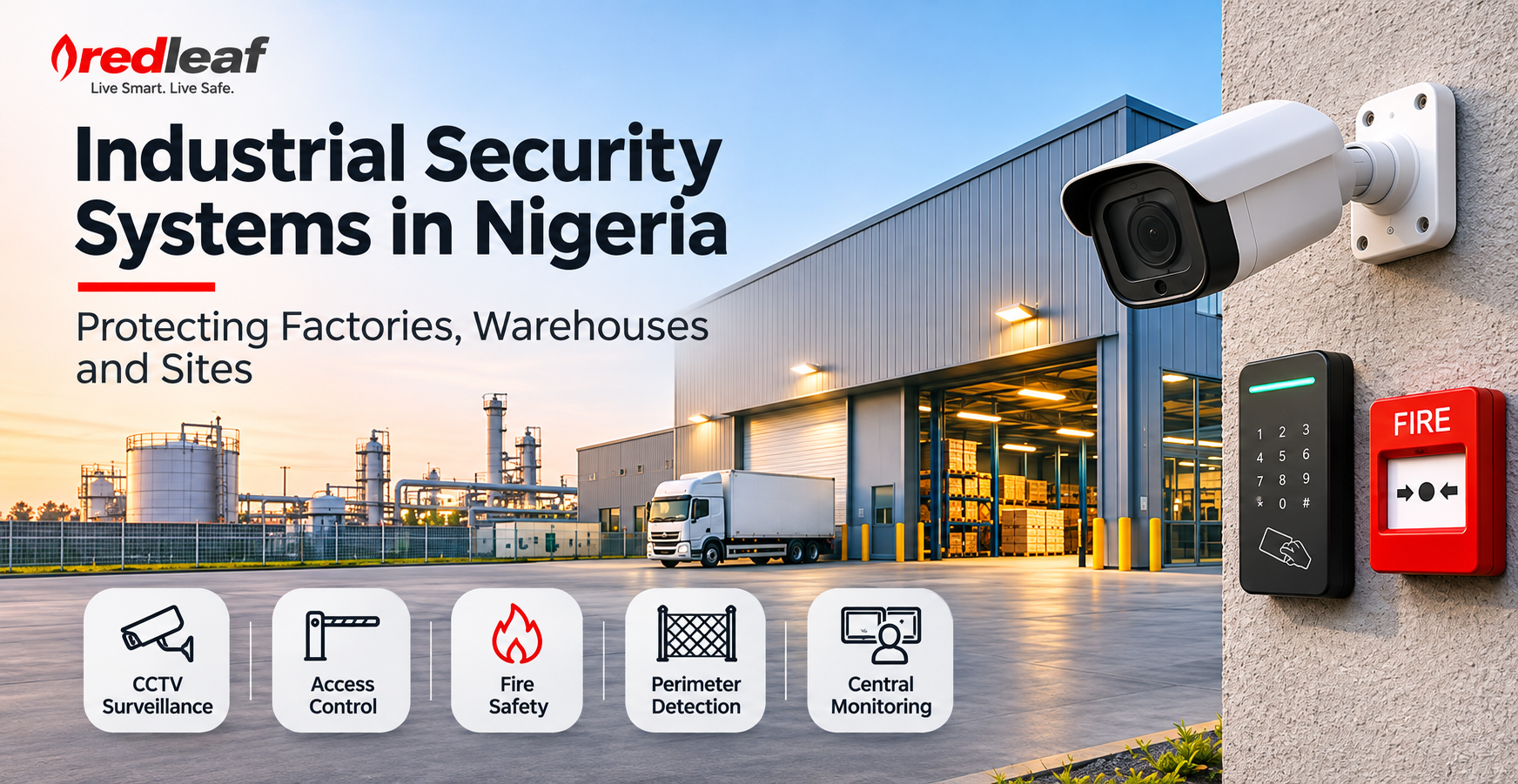
Industrial security systems in Nigeria protect more than property. A factory, warehouse, depot or plant has valuable stock, fuel, spare parts and machinery, large perimeters, many vehicles and staff working in shifts. A single weak gate or blind spot can lead to theft, downtime or a safety incident.
This guide explains how to protect factories, warehouses and sites with layered technology, and how to roll it out without stopping production.
Use a detection layer that raises an alarm when someone approaches or crosses the boundary, then use cameras to verify the alarm. Cameras alone only record what happened. Detection lets staff respond before the loss.
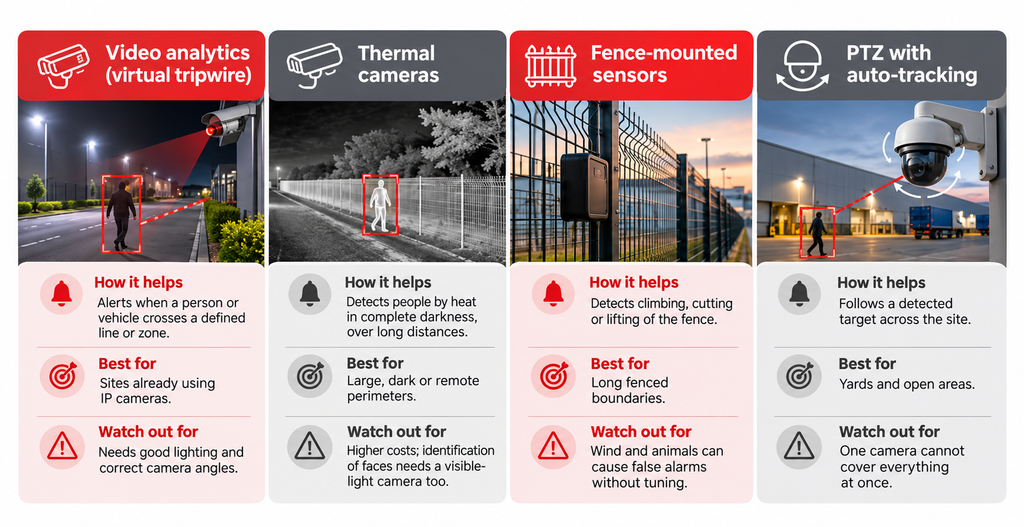
Add lighting, a siren or loudspeaker at the control point, and clear fields of view along the fence line.
Treat vehicle entry and personnel entry as two separate controls, then link both to the same record. A site should know which people and which vehicles are inside at any moment, which also matters for emergency roll calls.
Professional access control systems installation also ties the system to time and attendance and to emergency muster reports.
A warehouse typically needs perimeter and yard CCTV, controlled vehicle and personnel entry, cameras at loading bays and high-value zones, fire detection suited to stored goods, and a monitored control point. The exact mix depends on what is stored, the building layout and shift patterns.
Requirements checklist before you speak to an installer:
Industrial sites combine fire load, dust, fuel and machinery, so fire detection should be designed for each area. Heat or beam detectors often suit dusty plants and large warehouses better than ordinary smoke detectors. Link the fire system to access control so doors release for escape, and to CCTV so staff can verify an alarm quickly. Our guide to fire alarm installation Lagos explains detector selection and standards.
Gas detection and hazardous-area equipment are specialist subjects. Where flammable gas, vapour or dust is present, equipment must be certified for the area, so involve a qualified engineer.
A control room brings alarms, cameras and access events into one screen, so a trained operator can verify and respond. Good designs include video management software, alarm handling procedures, radio contact with guards, guard tour checks and recorded logs. Multi-site companies can monitor several plants and depots from one central point over a secure network, which depends on a sound backbone, as covered in our guide to network installation services Lagos. Technology improves detection and verification, but a response plan and trained people are still needed.
Roll out in phases, starting with the highest risk. Phasing keeps production running and spreads cost.
Plan trenching, cable routes and power at the start, and agree work windows with site managers so installers do not disrupt shifts or deliveries.
Cost depends on site size, perimeter length, number of cameras, gates and readers, control room needs and power and network works. Request an itemised, phased quotation, because imported equipment prices move with the exchange rate.
Yes. Work is phased by area and scheduled around shifts and deliveries, with the highest-risk areas first.
It reduces guard workload and improves detection and verification, but response still needs people. The strongest sites combine technology, trained guards and clear procedures.
Thermal cameras detect people by heat in complete darkness, and low-light or infrared cameras verify what is happening. Use both where identification matters.
Connect each site to a central video and alarm management platform over a secure network, with a trained operator and a written response procedure.
At least once a year, and more often in dusty or coastal sites. Servicing covers lens cleaning, firmware, storage health, sensor tuning and backup power checks.
Protecting a factory, warehouse or site? Our industrial security systems Nigeria team designs perimeter detection, CCTV, access control and fire integration as one phased plan. As a security systems company Lagos, we can also connect your server room through our data center security solutions Nigeria work. Contact us to arrange a site survey.